
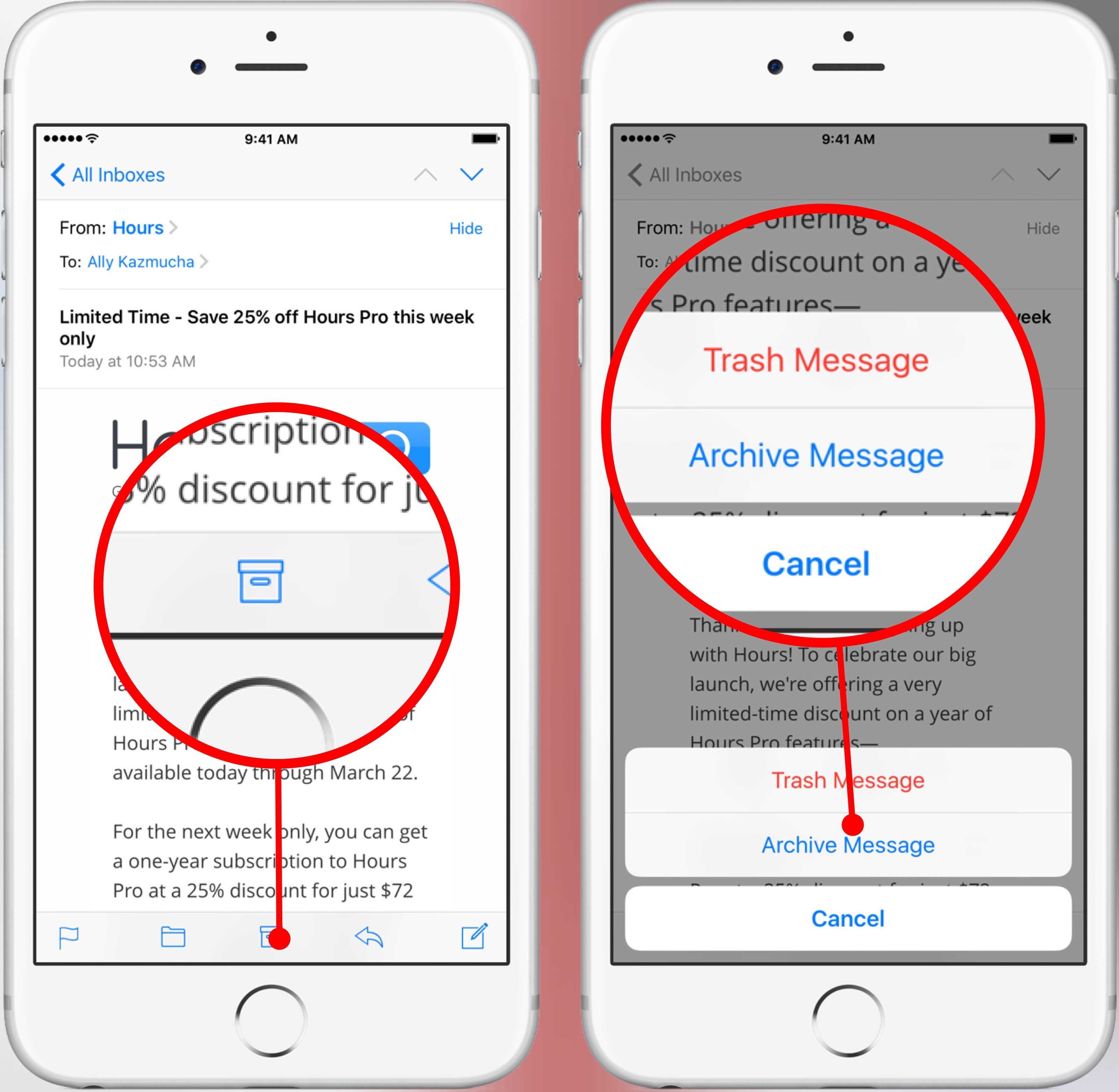
• In the Mail app on your Mac, select one or more messages. If you select a, any message in the conversation that’s in the current mailbox—for example, the Inbox—will be archived; related messages that are in other mailboxes will not be archived. • Click the Archive button in the Mail toolbar (or use the ). If you set the “Move discarded messages” option to Archive in in Mail, you can archive messages from Mail notifications. Just move the pointer over the Mail notification, then click Archive.
Open Mail > Preferences > Viewing and change 'Swipe Left To' from Trash to Archive (5th line down). For macOS Sierra, its a little different. Once you archive your emails they won't be available on any of your Macs or devices -- they will only 'live' inside your archive mailbox. This also makes it essential you backup your Mac, so you.
Mail creates an Archive mailbox in the for each whose messages you’re archiving, and moves the messages there. To view them, click the mailbox. Archived messages remain there until you delete or move them.
Microsoft office for mac update 14.7.7. Welcome to BleepingComputer, a free community where people like yourself come together to discuss and learn how to use their computers. Using the site is easy and fun.
As a guest, you can browse and view the various discussions in the forums, but can not create a new topic or reply to an existing one unless you are logged in. Other benefits of registering an account are subscribing to topics and forums, creating a blog, and having no ads shown anywhere on the site. Or read our to learn how to use this site. The first question is.how do you access/get your email messages?
Some other email client? Using a web browser? Assuming you use Apple Mail, then the likely easiest and best way would be to use Time Machine.
This will backup your entire Mac, including email messages. You can then supposedly restore email messages directly within the Apple Mail client using Time Machine. If you don't want to use Time Machine, then all of your Apple Mail accounts and email are stored in the following location: [hard drive name]:Users:[user name]:Library:Mail If you backup that folder (note that you may have to hold down the Option key while using the Go menu to find the Library folder in your Users account in the Finder as Apple hid that folder a number of macOS versions ago), then all of your Apple Mail settings, your accounts, and your email messages (including attachments) will be backed up. Restoring them might be a bit more of pain as you have to deal with permissions and a few other things, but they will be backed up. This manual method is a bit more of a pain than just using the Time Machine option. I believe you can potentially shortcut some of the hassle by using the Import function, but I have never tried it. Another option is to export messages or even entire mailboxes.
For a single message, just highlight it, then drag it to a Finder folder. This will leave a copy of the message in that folder AND in Apple Mail. For mailboxes, supposedly if you right-click on a mailbox in Apple Mail you will get a pop-up menu with the option to export the entire mailbox.for some reason, it is not working on my Mac.and I don't know why at the moment. If you are using some other email client, then I still might be able to help. Same goes if you are access email by way of a web browser.
I, however, would need to know the specifics. Another option may be to archive the emails on the mail server, but that will depend on whether your mail server is on-premise or cloud-based. If it's cloud based, you'll probably want an archiving solution that will work on the MacBook. Of course, if the email account is a server based account (such as IMAP and I believe Exchange as well), then technically the email will exist on both the computer and the server.
So, if the computer crashes, then the email should still be on the server. And presumably, if the email server crashes, there is a backup of the email server, but the messages should still be on the Mac.
Of course, this options does not account for accidental deletions on the Mac that then get propagated to the server.