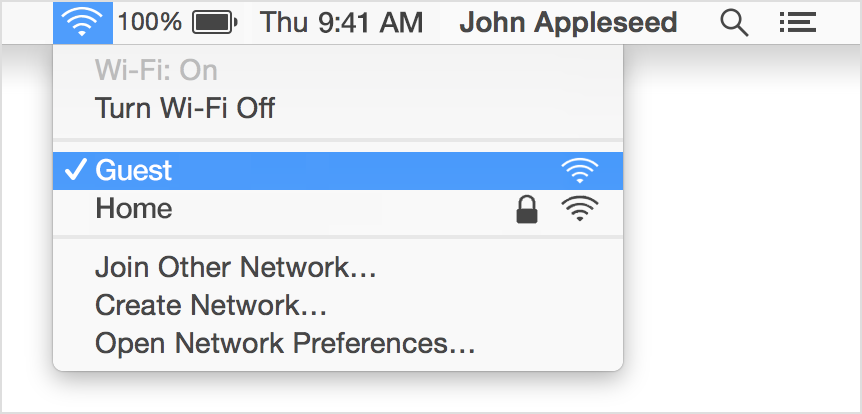
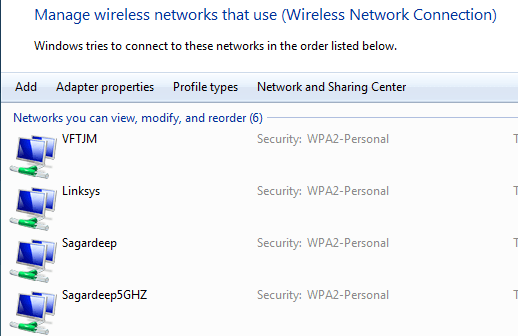
I am unable to see my wireless connection in the list of available networks. I can see a lot of them but not mine. Affinity photo free download mac. But here is the catch: I installed inSSIDer, and it can see my network and there is nothing looking weird. Jul 11, 2017 - Learn how to identify the hogs on your network and how to make sure your ISP is. Your home network will most certainly be faster than your internet connection, but it's the speed. Manager on your MacOS machine, and look for network statistics (it's labelled 'Network'on OS X, 'Networking' on Windows).
Most people will never have to (or want to) manage their networking profiles or locations. Setting up a connection to a Wi-Fi hotspot is all they'd need to do. However, some users might want or need tighter control over how their computer accesses the network and the internet. Why would you want to control your network profile?
Depending on your use case, there may never be a reason for you to manage your network profile. If you have a computer that never leaves a particular network, then you can literally set it and forget it. If you have a MacBook, then you might have access to a privileged network when at one location and need just typical network access when at another location. One such situation would be using a. For example, I have a network where my computers with low requirements of secure internet access go out to the internet via one gateway whilst my computers that require a higher level of security go out another gateway that has.
What's the problem? If I were to take my MacBook that uses the secure gateway to a friend's house, I would not be able to access the internet without making changes to the network settings. Depending on your network topology, these changes can be complicated and tedious. Adding a new network location would simplify the process of making the transition without having to memorize IPs, gateways, subnet masks and DNS servers.
One location would have my secure network settings, the other would have a general connection setup. How to set up a new network location Let's start by setting up our various network profiles. • Start System Preferences. • Click Network. • Tap the connection you want to manage. In our example, Wi-Fi.
• Click the Location drop down arrow. • Click Edit Locations. • Click the + to add a new location and give it a name. In this example this will be our Secure network. • Click Done. • Click Advanced. • Setup the network requirements you need for your specialized network location.
You can follow our if you need help with that. • If you need more specialized network settings, repeat steps 4 through 10. How to use your new network profiles Once you've set everything up, using the locations will be a breeze. • Start System Preferences.
• Click Network. • Tap the connection you want to manage. In our example, Wi-Fi. • Click the Location drop down arrow.
• Select the Network Location you need at the moment. • Click Apply. What about iOS? IOS is already setup to 'expect' different needs for different Wi-Fi networks. If you make a gateway change on one Wi-Fi network, iOS already knows that you'd need a separate networking profile when changing to a another Wi-Fi network. Final thoughts and comments I'd really like it if Apple were to make macOS Wi-Fi networking work similarly to iOS Wi-Fi networking.